Marfan syndrome is a disorder that affects the connective tissue in many parts of the body. Connective tissue provides strength and flexibility to structures such as bones, ligaments, muscles, blood vessels, and heart valves. The signs and symptoms of Marfan syndrome vary widely in severity, timing of onset, and rate of progression. Because connective tissue is found throughout the body, Marfan syndrome can affect many systems, often causing abnormalities in the heart, blood vessels, eyes, bones, and joints. The two primary features of Marfan syndrome are vision problems caused by a dislocated lens (ectopia lentis) in one or both eyes and defects in the large blood vessel that distributes blood from the heart to the rest of the body (the aorta). The aorta can weaken and stretch, which may lead to a bulge in the blood vessel wall (an aneurysm). Stretching of the aorta may cause the aortic valve to leak, which can lead to a sudden tearing of the layers in the aorta wall (aortic dissection). Aortic aneurysm and dissection can be life threatening. Many people with Marfan syndrome have additional heart problems including a leak in the valve that connects two of the four chambers of the heart (mitral valve prolapse) or the valve that regulates blood flow from the heart into the aorta (aortic valve regurgitation). Leaks in these valves can cause shortness of breath, fatigue, and an irregular heartbeat felt as skipped or extra beats (palpitations). Individuals with Marfan syndrome are usually tall and slender, have elongated fingers and toes (arachnodactyly), loose joints, and have an arm span that exceeds their body height. Other common features include a long and narrow face, crowded teeth, an abnormal curvature of the spine (scoliosis or kyphosis), stretch marks (striae) not related to weight gain or loss, and either a sunken chest (pectus excavatum) or a protruding chest (pectus carinatum). Some individuals develop an abnormal accumulation of air in the chest cavity that can result in the collapse of a lung (spontaneous pneumothorax). A membrane called the dura, which surrounds the brain and spinal cord, can be abnormally enlarged (dural ectasia) in people with Marfan syndrome. Dural ectasia can cause pain in the back, abdomen, legs, or head. Most individuals with Marfan syndrome have some degree of nearsightedness (myopia). Clouding of the lens (cataract) may occur in mid-adulthood, and increased pressure within the eye (glaucoma) occurs more frequently in people with Marfan syndrome than in those without the condition. The features of Marfan syndrome can become apparent anytime between infancy and adulthood. Depending on the onset and severity of signs and symptoms, Marfan syndrome can be fatal early in life; however, with proper treatment, many affected individuals have normal lifespans.Marfan syndrome is a disorder that affects the connective tissue in many parts of the body. Connective tissue provides strength and flexibility to structures such as bones, ligaments, muscles, blood vessels, and heart valves. The signs and symptoms of Marfan syndrome vary widely in severity, timing of onset, and rate of progression. Because connective tissue is found throughout the body, Marfan syndrome can affect many systems, often causing abnormalities in the heart, blood vessels, eyes, bones, and joints. The two primary features of Marfan syndrome are vision problems caused by a dislocated lens (ectopia lentis) in one or both eyes and defects in the large blood vessel that distributes blood from the heart to the rest of the body (the aorta). The aorta can weaken and stretch, which may lead to a bulge in the blood vessel wall (an aneurysm). Stretching of the aorta may cause the aortic valve to leak, which can lead to a sudden tearing of the layers in the aorta wall (aortic dissection). Aortic aneurysm and dissection can be life threatening. Many people with Marfan syndrome have additional heart problems including a leak in the valve that connects two of the four chambers of the heart (mitral valve prolapse) or the valve that regulates blood flow from the heart into the aorta (aortic valve regurgitation). Leaks in these valves can cause shortness of breath, fatigue, and an irregular heartbeat felt as skipped or extra beats (palpitations). Individuals with Marfan syndrome are usually tall and slender, have elongated fingers and toes (arachnodactyly), loose joints, and have an arm span that exceeds their body height. Other common features include a long and narrow face, crowded teeth, an abnormal curvature of the spine (scoliosis or kyphosis), stretch marks (striae) not related to weight gain or loss, and either a sunken chest (pectus excavatum) or a protruding chest (pectus carinatum). Some individuals develop an abnormal accumulation of air in the chest cavity that can result in the collapse of a lung (spontaneous pneumothorax). A membrane called the dura, which surrounds the brain and spinal cord, can be abnormally enlarged (dural ectasia) in people with Marfan syndrome. Dural ectasia can cause pain in the back, abdomen, legs, or head. Most individuals with Marfan syndrome have some degree of nearsightedness (myopia). Clouding of the lens (cataract) may occur in mid-adulthood, and increased pressure within the eye (glaucoma) occurs more frequently in people with Marfan syndrome than in those without the condition. The features of Marfan syndrome can become apparent anytime between infancy and adulthood. Depending on the onset and severity of signs and symptoms, Marfan syndrome can be fatal early in life; however, with proper treatment, many affected individuals have normal lifespans.
Read More
Read Less
Summary
Marfan syndrome is a disorder that affects the connective tissue in many parts of the body. Connective tissue provides strength and flexibility to structures such as bones, ligaments, muscles, blood vessels, and heart valves. The signs and symptoms of Marfan syndrome vary widely in severity, timing of onset, and rate of progression. Because connective tissue is found throughout the body, Marfan syndrome can affect many systems, often causing abnormalities in the heart, blood vessels, eyes, bones, and joints. The two primary features of Marfan syndrome are vision problems caused by a dislocated lens (ectopia lentis) in one or both eyes and defects in the large blood vessel that distributes blood from the heart to the rest of the body (the aorta). The aorta can weaken and stretch, which may lead to a bulge in the blood vessel wall (an aneurysm). Stretching of the aorta may cause the aortic valve to leak, which can lead to a sudden tearing of the layers in the aorta wall (aortic dissection). Aortic aneurysm and dissection can be life threatening. Many people with Marfan syndrome have additional heart problems including a leak in the valve that connects two of the four chambers of the heart (mitral valve prolapse) or the valve that regulates blood flow from the heart into the aorta (aortic valve regurgitation). Leaks in these valves can cause shortness of breath, fatigue, and an irregular heartbeat felt as skipped or extra beats (palpitations). Individuals with Marfan syndrome are usually tall and slender, have elongated fingers and toes (arachnodactyly), loose joints, and have an arm span that exceeds their body height. Other common features include a long and narrow face, crowded teeth, an abnormal curvature of the spine (scoliosis or kyphosis), stretch marks (striae) not related to weight gain or loss, and either a sunken chest (pectus excavatum) or a protruding chest (pectus carinatum). Some individuals develop an abnormal accumulation of air in the chest cavity that can result in the collapse of a lung (spontaneous pneumothorax). A membrane called the dura, which surrounds the brain and spinal cord, can be abnormally enlarged (dural ectasia) in people with Marfan syndrome. Dural ectasia can cause pain in the back, abdomen, legs, or head. Most individuals with Marfan syndrome have some degree of nearsightedness (myopia). Clouding of the lens (cataract) may occur in mid-adulthood, and increased pressure within the eye (glaucoma) occurs more frequently in people with Marfan syndrome than in those without the condition. The features of Marfan syndrome can become apparent anytime between infancy and adulthood. Depending on the onset and severity of signs and symptoms, Marfan syndrome can be fatal early in life; however, with proper treatment, many affected individuals have normal lifespans.Marfan syndrome is a disorder that affects the connective tissue in many parts of the body. Connective tissue provides strength and flexibility to structures such as bones, ligaments, muscles, blood vessels, and heart valves. The signs and symptoms of Marfan syndrome vary widely in severity, timing of onset, and rate of progression. Because connective tissue is found throughout the body, Marfan syndrome can affect many systems, often causing abnormalities in the heart, blood vessels, eyes, bones, and joints. The two primary features of Marfan syndrome are vision problems caused by a dislocated lens (ectopia lentis) in one or both eyes and defects in the large blood vessel that distributes blood from the heart to the rest of the body (the aorta). The aorta can weaken and stretch, which may lead to a bulge in the blood vessel wall (an aneurysm). Stretching of the aorta may cause the aortic valve to leak, which can lead to a sudden tearing of the layers in the aorta wall (aortic dissection). Aortic aneurysm and dissection can be life threatening. Many people with Marfan syndrome have additional heart problems including a leak in the valve that connects two of the four chambers of the heart (mitral valve prolapse) or the valve that regulates blood flow from the heart into the aorta (aortic valve regurgitation). Leaks in these valves can cause shortness of breath, fatigue, and an irregular heartbeat felt as skipped or extra beats (palpitations). Individuals with Marfan syndrome are usually tall and slender, have elongated fingers and toes (arachnodactyly), loose joints, and have an arm span that exceeds their body height. Other common features include a long and narrow face, crowded teeth, an abnormal curvature of the spine (scoliosis or kyphosis), stretch marks (striae) not related to weight gain or loss, and either a sunken chest (pectus excavatum) or a protruding chest (pectus carinatum). Some individuals develop an abnormal accumulation of air in the chest cavity that can result in the collapse of a lung (spontaneous pneumothorax). A membrane called the dura, which surrounds the brain and spinal cord, can be abnormally enlarged (dural ectasia) in people with Marfan syndrome. Dural ectasia can cause pain in the back, abdomen, legs, or head. Most individuals with Marfan syndrome have some degree of nearsightedness (myopia). Clouding of the lens (cataract) may occur in mid-adulthood, and increased pressure within the eye (glaucoma) occurs more frequently in people with Marfan syndrome than in those without the condition. The features of Marfan syndrome can become apparent anytime between infancy and adulthood. Depending on the onset and severity of signs and symptoms, Marfan syndrome can be fatal early in life; however, with proper treatment, many affected individuals have normal lifespans.
Read More
Read Less
Resource(s) for Medical Professionals and Scientists on This Disease:
GeneReviewprovides clinical information on genetic diseases, including diagnosis, treatment, and genetic counseling.
About Marfan syndrome
Many rare diseases have limited information. Currently, GARD aims to provide the following information for this disease:
Symptoms:May start to appear at any time in life.
Cause:This disease is caused by a change in the genetic material (DNA).
Organizations:Patient organizations dedicated to this rare disease are available on GARD, or you may contact a GARD Information Specialist for additional information.
Categories:GeneticdiseasesBirthdefects
Causes
What Causes This Disease?
Genetic Mutations
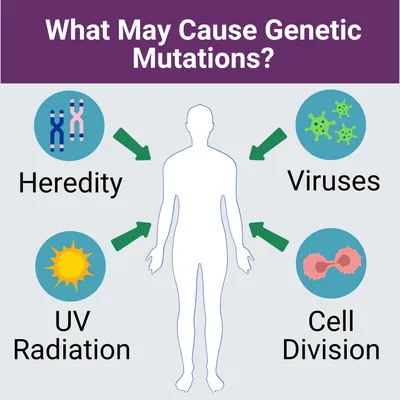
Marfan syndrome is caused by genetic mutations, also known as pathogenic variants. Genetic mutations can be hereditary, when parents pass them down to their children, or they may occur randomly when cells are dividing. Genetic mutations may also result from contracted viruses, environmental factors, such as UV radiation from sunlight exposure, or a combination of any of these. Learn more about genetic diseases from the National Library of Medicine (NLM).
If you suspect you may have this disease, you may want to start collecting your family health history. Information such as other family members who have had similar symptoms, when their/your symptoms first appeared, or exposures to any potential disease-causing environmental factors should be discussed with your medical team. This tool from the Surgeon General can help you collect your family health history.
Can diseases be passed down from parent to child?
A biological parent can sometimes pass down genetic changes, called mutations, that cause a disease or increase the chances of developing it. This is called inheritance. Knowing if other family members have had the disease, also known as your family health history, can give your medical team important information. The Surgeon General offers a tool to help you collect your family health history.
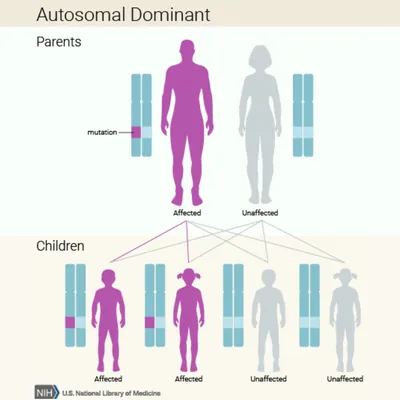
Autosomal Dominant
Autosomal means the gene involved is located on one of the numbered chromosomes. Dominant means that a child only needs to inherit one copy of the mutated gene, from either biological parent, to be affected by the disease.
People affected by an autosomal dominant disease have a 50% chance of passing on the mutated gene to their biological child.
Symptoms of this disease may start to appear at any time in life.
The age symptoms may begin to appear differs between diseases. Symptoms may begin in a single age range, or during several age ranges. The symptoms of some diseases may begin at any age. Knowing when symptoms may have appeared can help medical providers find the correct diagnosis.
Prenatal Selected
Before Birth
Newborn Selected
Birth-4 weeks
Infant Selected
1-23 months
Child Selected
2-11 years
Adolescent Selected
12-18 years
Adult Selected
19-65 years
Older Adult Selected
65+ years
Symptoms may start to appear at any time in life.
Symptoms
The types of symptoms experienced, and their intensity, may vary among people with this disease. Your experience may be different from others. Consult your health care team for more information.
The following describes the symptom(s) associated with this disease along with the corresponding body system(s), description, synonyms, and frequency (Note: Not all possible symptoms may be listed):
Cardiovascular System Cardiovascular System
68 Symptoms
68 Symptoms
68 Symptoms
Cardiovascular System
The cardiovascular system is made up of the heart and blood vessels, including the arteries, veins, and capillaries. Common symptoms of problems in the cardiovascular system include high blood pressure, heart rate or heart rhythm problems, chest pain or discomfort, pain or tingling in the hands or feet, and fatigue. Diseases of the cardiovascular system may be diagnosed and treated by a cardiologist.
Medical Term
Aortic aneurysm
Frequency
Uncommon
Very frequent
Very frequent
Always
Description
Aortic dilatation refers to a dimension that is greater than the 95th percentile for the normal person age, sex and body size. In contrast, an aneurysm is defined as a localized dilation of the aorta that is more than 150 percent of predicted (ratio of observed to expected diameter 1.5 or more). Aneurysm should be distinguished from ectasia, which represents a diffuse dilation of the aorta less than 50 percent of normal aorta diameter.
Synonym
Aortic dilatation; Bulge in wall of large artery that carries blood away from heart; Enlarged aorta
On average, it can take more than six years to receive an accurate diagnosis. Many primary care providers (PCPs) may not be familiar with rare diseases, and patients often need to visit multiple specialists or seek second opinions to get answers.
If a diagnosis remains unclear, visiting a multidisciplinary care center or university hospital may help. These centers bring together teams of specialists who can work together to evaluate symptoms and coordinate a diagnosis. This team-based approach is also helpful after a diagnosis, when managing care for rare diseases.
Because only about 5% of rare diseases have FDA-approved treatments, finding the right healthcare team to manage your symptoms and overall health is essential. People living with rare diseases often face challenges such as delayed diagnosis, limited treatment options, and difficulty accessing knowledgeable providers. Building a care team that understands your needs can make a significant difference in your quality of life.
Your Health Care Team
Why is building the right health care team important?
Building the right health care team is key to the diagnosis, treatment, and management of your long-term health journey living with a rare disease. Start by choosing a primary care provider (PCP). Your PCP will be your main point of contact and help coordinate care with other medical professionals. Your PCP may order tests or refer you to specialists. To find a PCP near you, use the Medicare provider search tool and enter your location and “Primary Care Provider.”
Seeing multiple specialists is important for people with rare diseases because these conditions often affect many parts of the body and require care from doctors with different expertise. Most primary care providers may not be familiar with rare diseases, so involving specialists can lead to a more accurate diagnosis and better care. A coordinated team approach ensures that all symptoms are addressed and that care is well-managed. It can also connect patients with the latest research or treatment options.
These specialists may help in the diagnosis, management, and treatment of Marfan syndrome:
Multidisciplinary Care Centers
Is It Time to Get a Second Opinion or Specialized Evaluation?
If you've visited your PCP, met with specialists, and undergone the recommended tests, but are still searching for a diagnosis, it may be time to visit an academic medical center or, for pediatric patients, a children's hospital. Academic medical centers and children's hospitals, often called multidisciplinary care centers, typically bring together specialists from different fields to work together on complex cases like rare diseases.
Multidisciplinary care centers may offer more coordinated care and be involved in clinical research, which may help reduce the time to diagnosis and provide access to emerging diagnostic tools. Specialists at these centers may have a deeper understanding of rare diseases and serve as a resource when you'd like a second opinion, particularly when test results or treatment plans are not delivering expected results.
Use this tool to find hospitals that may partner with medical schools and programs in your area.
Children’s hospitals and large teaching hospitals may also offer dedicated specialists and programs for pediatric patients with undiagnosed or rare diseases. These programs bring pediatric experts together in one place and may provide more coordinated care for your child.
Use this tool to search for children’s or university hospitals in your area.
Multidisciplinary Care Centers
Is It Time to Get a Second Opinion or Specialized Evaluation?
If you've visited your PCP, met with specialists, and undergone the recommended tests, but are still searching for a diagnosis, it may be time to visit an academic medical center or, for pediatric patients, a children's hospital. Academic medical centers and children's hospitals, often called multidisciplinary care centers, typically bring together specialists from different fields to work together on complex cases like rare diseases.
Multidisciplinary care centers may offer more coordinated care and be involved in clinical research, which may help reduce the time to diagnosis and provide access to emerging diagnostic tools. Specialists at these centers may have a deeper understanding of rare diseases and serve as a resource when you'd like a second opinion, particularly when test results or treatment plans are not delivering expected results.
Use this tool to find hospitals that may partner with medical schools and programs in your area.
Children’s hospitals and large teaching hospitals may also offer dedicated specialists and programs for pediatric patients with undiagnosed or rare diseases. These programs bring pediatric experts together in one place and may provide more coordinated care for your child.
Use this tool to search for children’s or university hospitals in your area.
Rare Disease Experts
How can you find a rare disease expert?
If a diagnosis, care management, or treatment plan remains unclear despite extensive efforts by your PCP and specialists, it may be time to find a rare disease expert for your disease, if available. A rare disease expert is a medical provider that has knowledge or training on specific rare disease(s), but there may only be a few experts in your state, region, or country. Rare disease experts may work at large research or teaching hospitals, sometimes called centers of excellence. Centers of Excellence commit to sharing knowledge and best practices that can lead to improved care and treatment for individuals living with a rare disease.
You can ask your care providers for help finding an expert or use directory tools to search for experts near you. The following organization(s) may maintain a list of experts or expert centers for people living with Marfan syndrome:
If a diagnosis, care management, or treatment plan remains unclear despite extensive efforts by your PCP and specialists, it may be time to find a rare disease expert for your disease, if available. A rare disease expert is a medical provider that has knowledge or training on specific rare disease(s), but there may only be a few experts in your state, region, or country. Rare disease experts may work at large research or teaching hospitals, sometimes called centers of excellence. Centers of Excellence commit to sharing knowledge and best practices that can lead to improved care and treatment for individuals living with a rare disease.
You can ask your care providers for help finding an expert or use directory tools to search for experts near you. The following organization(s) may maintain a list of experts or expert centers for people living with Marfan syndrome:
Patient organizations can help patients and families connect. They build public awareness of the disease and are a driving force behind research to improve patients' lives. They may offer online and in-person resources to help people live well with their disease. Many collaborate with medical experts and researchers.
Services of patient organizations differ, but may include:
Ways to connect to others and share personal stories
Easy-to-read information
Up-to-date treatment and research information
Patient registries
Lists of specialists or specialty centers
Financial aid and travel resources
Please note: GARD provides organizations for informational purposes only and not as an endorsement of their services. Contact a GARD Information Specialist for more information on organizations that may be dedicated to this disease. Please contact an organization directly if you have questions about the information or resources it provides.
Clinical studies are a part of clinical research and play an important role in medical advances for rare diseases. Through clinical studies, researchers may ultimately uncover better ways to treat, prevent, diagnose, and understand human diseases.
What Are Clinical Studies?
Clinical studies are medical research involving people as participants. There are two main types of clinical studies:
Clinical trials determine if a new test or treatment for a disease is effective and safe by comparing groups receiving different tests/treatments.
Observational studies involve recording changes over time among a specific group of people in their natural settings.
People participate in clinical trials for many reasons. People with a disease may participate to receive the newest possible treatment and additional care from clinical study staff as well as to help others living with the same or a similar disease. Healthy volunteers may participate to help others and to contribute to moving science forward.
To find the right clinical study we recommend you consult your doctors, other trusted medical professionals, and patient organizations. Additionally, you can use ClinicalTrials.gov to search for clinical studies by disease, terms, or location.
What if There Are No Available Clinical Studies?
ResearchMatch helps connect people interested in research studies with researchers from top medical centers across the United States. Anyone from the U.S. can register with this free program funded by NIH. Researchers from participating institutions use the database to search for and invite patients or healthy volunteers who meet their study criteria to participate.
Why may you want to consider joining the All of Us Research Program?
The All of Us Research Program is inviting 1 million people from all backgrounds across the U.S. to help build one of the most diverse health databases in history. Researchers will use the data to learn how our biology, lifestyle, and environment affect health. This may one day help them find ways to treat and prevent diseases.
What Are Clinical Studies?
Clinical studies are medical research involving people as participants. There are two main types of clinical studies:
Clinical trials determine if a new test or treatment for a disease is effective and safe by comparing groups receiving different tests/treatments.
Observational studies involve recording changes over time among a specific group of people in their natural settings.
People participate in clinical trials for many reasons. People with a disease may participate to receive the newest possible treatment and additional care from clinical study staff as well as to help others living with the same or a similar disease. Healthy volunteers may participate to help others and to contribute to moving science forward.
To find the right clinical study we recommend you consult your doctors, other trusted medical professionals, and patient organizations. Additionally, you can use ClinicalTrials.gov to search for clinical studies by disease, terms, or location.People participate in clinical trials for many reasons. People with a disease may participate to receive the newest possible treatment and additional care from clinical study staff as well as to help others living with the same or a similar disease. Healthy volunteers may participate to help others and to contribute to moving science forward.
To find the right clinical study we recommend you consult your doctors, other trusted medical professionals, and patient organizations. Additionally, you can use ClinicalTrials.gov to search for clinical studies by disease, terms, or location.
Read More
Read Less
What if There Are No Available Clinical Studies?
ResearchMatch helps connect people interested in research studies with researchers from top medical centers across the United States. Anyone from the U.S. can register with this free program funded by NIH. Researchers from participating institutions use the database to search for and invite patients or healthy volunteers who meet their study criteria to participate.
Why may you want to consider joining the All of Us Research Program?
The All of Us Research Program is inviting 1 million people from all backgrounds across the U.S. to help build one of the most diverse health databases in history. Researchers will use the data to learn how our biology, lifestyle, and environment affect health. This may one day help them find ways to treat and prevent diseases.
ClinicalTrials.gov, an affiliate of NIH, provides current information on clinical research studies in the United States and abroad. Talk to a trusted doctor before choosing to participate in any clinical study. We recommend checking this site often and searching for studies with related terms/synonyms to improve results.
Contact a GARD Information Specialist if you need help finding more information on this rare disease or available clinical studies. Please note that GARD cannot enroll individuals in clinical studies.
Use the contact form to send your questions to a GARD Information Specialist.
Please allow 2 to 10 business days for us to respond.
ClinicalTrials.gov, an affiliate of NIH, provides current information on clinical research studies in the United States and abroad. Talk to a trusted doctor before choosing to participate in any clinical study. We recommend checking this site often and searching for studies with related terms/synonyms to improve results.
Contact a GARD Information Specialist if you need help finding more information on this rare disease or available clinical studies. Please note that GARD cannot enroll individuals in clinical studies.
Mondo Disease Ontology provides a logic-based structure unifying multiple disease resources in coordination with the Human Phenotype Ontology (HPO) and support from the NIH National Human Genome Research Institute Phenomics First Resource.
GARD uses the Human Phenotype Ontology (HPO) for standard terminology to represent a disease's phenotypic and clinical features.